Research at Prosperous Planet

Using Research to Benefit Humanity

Prosperous Planet supports research driven by curiosity, persistence, and logic. Our work includes a proof of the Twin Prime Conjecture, a geometric framework connecting fundamental physics with hydrogen spectral lines, and custom neural-network experiments using original learning and loss functions.

This page brings together formal papers, technical experiments, earlier approaches, and continuing investigations. We believe meaningful discoveries begin with the willingness to explore an idea, learn from failure, and keep improving until the solution becomes clear.

Research with a Human Purpose

At Prosperous Planet, research is not pursued only for knowledge itself. We study mathematics, physics, artificial intelligence, chemistry, and biology because a deeper understanding of nature can give humanity new ways to protect life, overcome disease, restore the environment, and build a more peaceful and prosperous world.

Just as a train connecting the world could build both literal and cultural bridges between nations, scientific discovery can connect ideas that once appeared separate and turn them into practical solutions.

What We Are Working Toward

  • A unified mathematical understanding of physics that can lead to clearer models of chemistry, matter, and energy.
  • New insights into biology and DNA that may help prevent disease, extend healthy life, and eventually make regenerative medicine possible.
  • Artificial intelligence and engineering systems that can improve recycling, strengthen communities, and help humanity live in greater balance with nature.
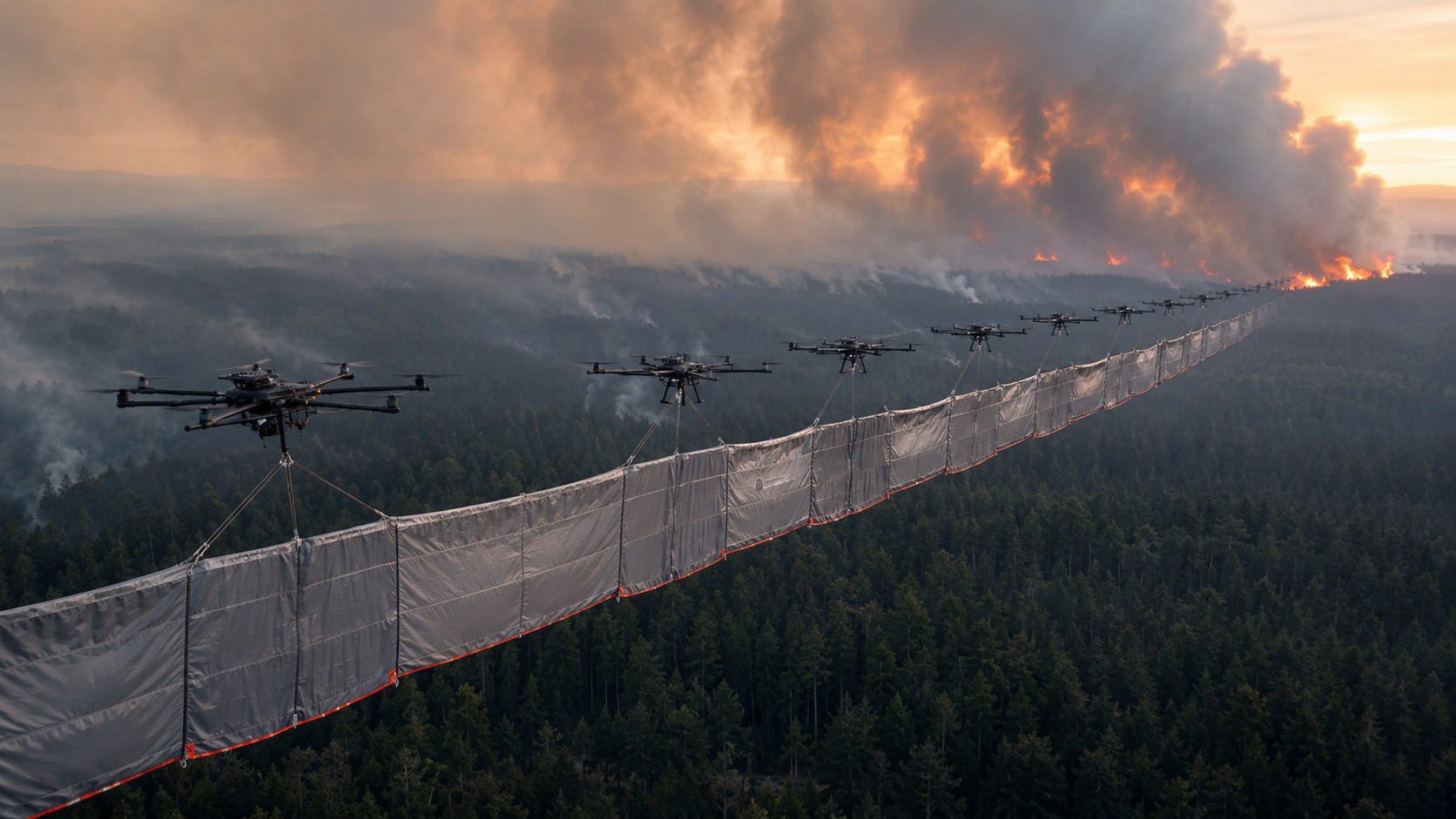
  • Technologies capable of protecting people from fires, floods, landslides, storms, volcanoes, and other natural disasters.

Our Research Areas

Our current work explores the hidden structures behind numbers, physical laws, and intelligent systems. Although these fields may appear separate, each investigation is guided by the same goal: understanding complex systems clearly enough to create something useful from them.

Prime Numbers and Mathematical Structure

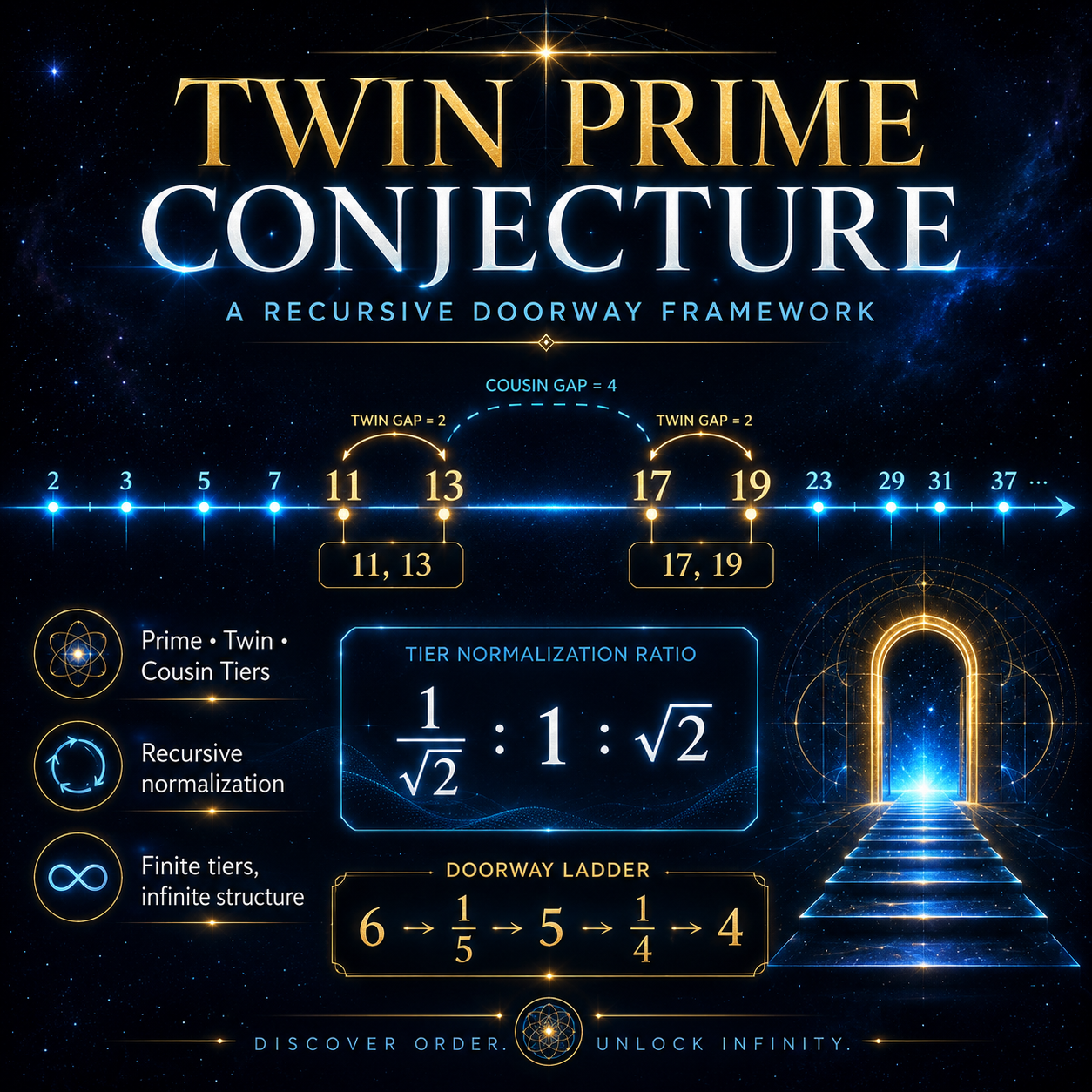
Our work in number theory examines the recurring relationships between prime numbers, including a structural proof of the Twin Prime Conjecture. This research explores how prime pairs, numerical intervals, and recursive patterns arise from an underlying mathematical order.

Explore our mathematics papers
Unified Physics and Hydrogen Spectroscopy

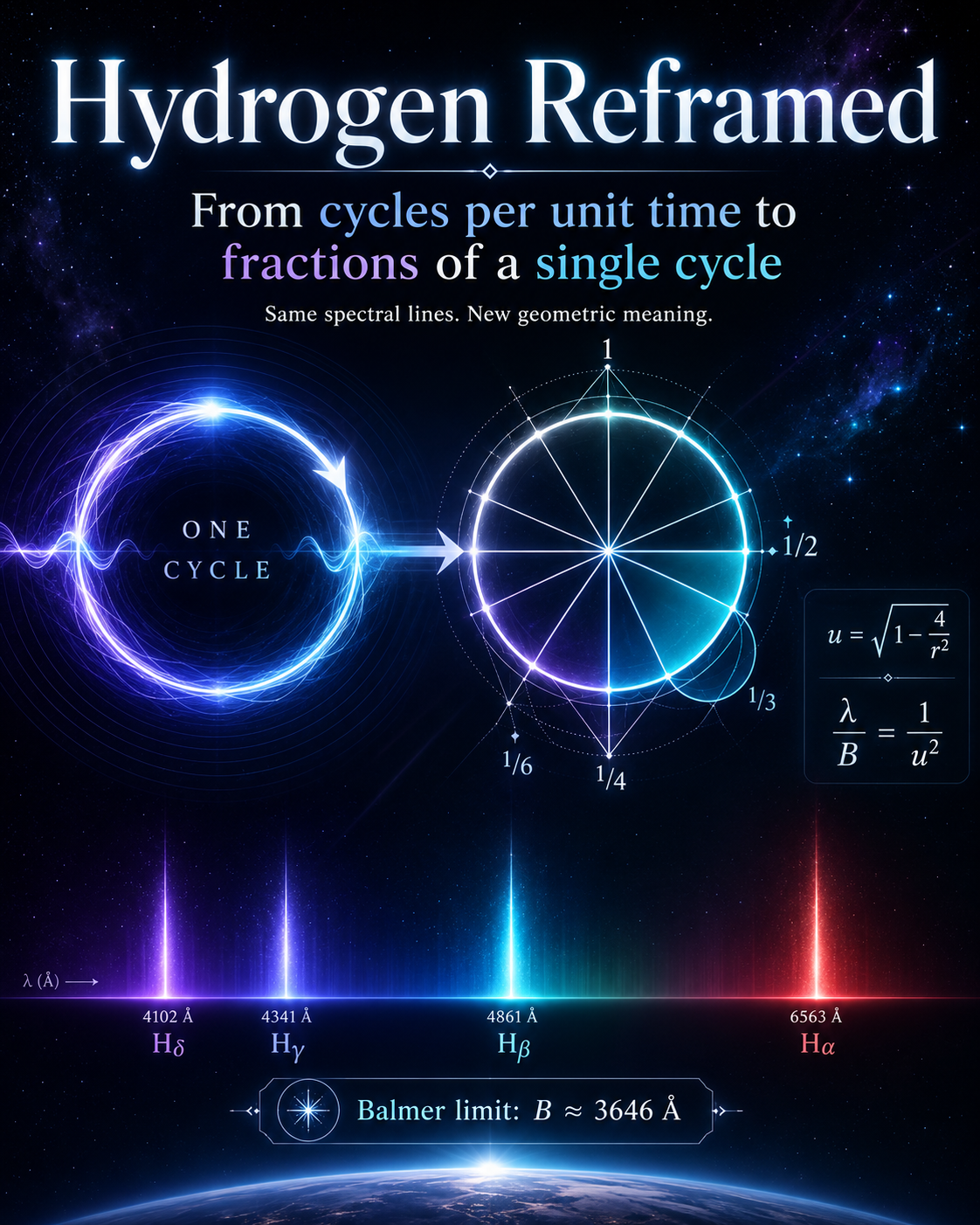
Our geometric framework investigates whether gravity, energy, matter, and fundamental physical constants can be understood as parts of one connected system. Hydrogen spectral lines provide a measurable bridge between this mathematical structure and the physical world.

Explore our physics papers

Artificial Intelligence and Neural Networks

Our artificial-intelligence research includes building neural networks from the ground up and testing original learning methods and loss functions on the MNIST handwritten-digit dataset. This work helps us understand how intelligent systems learn rather than relying only on established tools.

Explore our AI research

Current Research

Completed Papers

These papers present the two principal results currently forming the mathematical and physical foundation of our research program.

Preview of the Twin Prime Conjecture paper
Current Paper · Number Theory

Paper 1 — Twin Prime Conjecture

This paper presents a structural proof of the Twin Prime Conjecture by examining the recurring relationships between prime pairs, composite boundaries, reciprocal doorways, and the recursive mathematical structure that preserves twin-prime separation.

Hydrogen spectral-line diagram and paper preview
Current Paper · Fundamental Physics

Paper 2 — Hydrogen Spectral Lines

This paper connects hydrogen spectroscopy with a broader geometric framework for physical law. It examines the Balmer series, dimensional structure, fundamental constants, and the measurable relationship between discrete mathematical levels and the observed spectrum of hydrogen.

Artificial Intelligence

Neural-Network Experiments

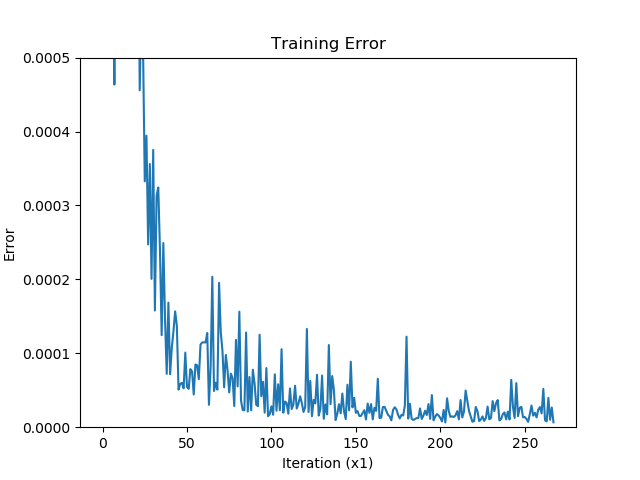
Over the course of ten years we have developed unique algorithms and Neural Network architechtures to solve commonly attacked problems such as the Mnist Dataset. Throughout this ten year journey we tested hundreds of different learning functions, developed directly from first mathematical principles. Our most recent and best model surpassed the currently held record for MNIST, while also using less compute.

Graph showing the performance of a custom neural-network learning function

Early Results

These Python files represent my early work with neural networks. They include many learning functions and experimental approaches, including methods that were tested and later found to be ineffective.

View results and files
Graph showing the performance of a custom neural-network learning function

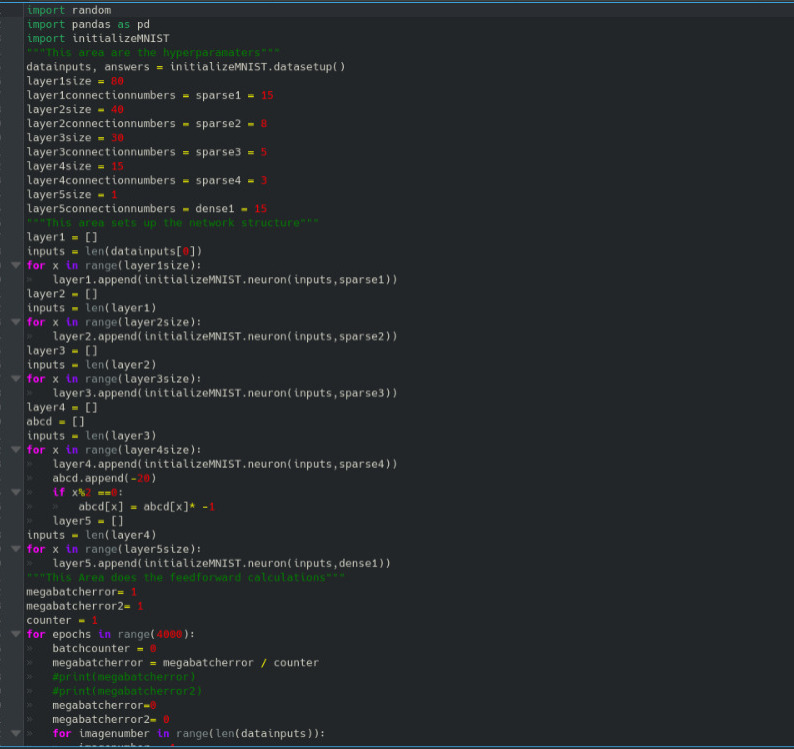
Source Code

Explore our older experimental neural-network architectures, custom learning functions, loss calculations, training process, and supporting code used to conduct the experiments.

View the project on GitHub
Aerial image of drones putting out a forest fire.

Current Research Areas and benchmarks

Our best models are now able to meet or exceed some of the strongest models at the simple tasks. Our next question is, can we turn that into a benefit to Humanity? We begin the journey of Robotics.

Learn more about our current projects

Research Archive

Earlier Approaches and Lessons

Progress rarely follows a straight line. These earlier papers are preserved as a record of the experiments, partial discoveries, incorrect assumptions, and revisions that eventually contributed to our current work. They are historical documents and do not represent our present conclusions.

Superseded Paper

A Recursive Time-Dimensional Framework for physical interactions

I had no idea just how close I already was in this paper. But the mere fact that I put in the effort to make, and to thuroughly learn why it was wrong, helped discover what was right.

Read the archived paper
Number Theory

A Dyadic–Rotational Decomposition of the Riemann Zeta Function

Working on pure number theory problems help me to understand the problems of mathematics in general and how to overcome them.

Read the archived paper
Earlier Approach

Logical arguments regarding spinning and circles.

Since a young age of 13 I had expected that the world must make sense, it must follow rules. I looked to Geometry for those rules which were already inherently built into the logic.

Read the archived paper

Help Us Turn Ambitious Ideas into Reality

Prosperous Planet is looking for curious, determined people who believe science and technology can build a better future. We welcome engineers, programmers, AI researchers, mathematicians, physicists, designers, builders, and enthusiastic people who want to contribute their skills, challenge ideas, and help develop projects that can benefit humanity.

Great discoveries and world-changing projects are rarely built by one person. They begin when people with different knowledge, experiences, and perspectives decide to work toward something greater together.